

Been binge-watching anime and thinking your baby deserves a name with that same magic? You’re onto something special. Japanese names carry stories in every syllable, blending beautiful sounds with meanings that connect to nature, seasons, and dreams you hold for your little one. As a parent, you want your child to stand out, and these rare Japanese names do exactly that without feeling over the top.
The best part? You’re not stuck choosing between trendy and meaningful. Below, you’ll find over 195 unique Japanese names, each paired with its meaning, pronunciation guide, and kanji characters, making it easy for anyone to choose the perfect name. Whether you’re team boy, team girl, or keeping it a surprise, there’s something here that’ll make your heart skip. Let’s find the name that feels like it was waiting for your baby all along.
Unique Japanese Boy Names
Japanese boy names often draw from nature, strength, and positive qualities parents wish for their sons.
These names sound strong yet gentle, perfect for a little guy who’ll grow into them.
- Sosuke (颯介) – Pronounced “Soh-skeh” – Means “refreshing helper”
- Daichi (大地) – Pronounced “Dah-ee-chee” – Means “great earth”
- Riku (陸斗) – Pronounced “Ree-koo” – Means “land warrior”
- Kaito (海斗) – Pronounced “Kah-ee-toh” – Means “ocean warrior”
- Haruto (陽斗) – Pronounced “Hah-roo-toh” – Means “sunny warrior”
- Yuuma (悠真) – Pronounced “Yoo-mah” – Means “gentle truth”
- Souta (颯太) – Pronounced “Soh-tah” – Means “refreshing thick”
- Kouki (光輝) – Pronounced “Koh-kee” – Pronounced “light radiance”
- Hayato (隼人) – Pronounced “Hah-yah-toh” – Means “falcon person”
- Shouma (翔真) – Pronounced “Shoh-mah” – Means “soaring truth”
- Yuuto (悠人) – Pronounced “Yoo-toh” – Means “gentle person”
- Ren (蓮) – Pronounced “Rehn” – Means “lotus flower”
- Souma (颯真) – Pronounced “Soh-mah” – Means “refreshing truth”
- Asahi (朝陽) – Pronounced “Ah-sah-hee” – Means “morning sun”
- Hinata (陽向) – Pronounced “Hee-nah-tah” – Means “sunny place”
- Kouta (航太) – Pronounced “Koh-tah” – Means “sailing thick”
- Yamato (大和) – Pronounced “Yah-mah-toh” – Means “great harmony”
- Sora (空) – Pronounced “Soh-rah” – Means “sky”
- Taiga (大河) – Pronounced “Tah-ee-gah” – Means “big river”
- Aoi (葵) – Pronounced “Ah-oh-ee” – Means “hollyhock flower”
- Kaede (楓) – Pronounced “Kah-eh-deh” – Means “maple tree”
- Minato (湊) – Pronounced “Mee-nah-toh” – Means “harbor”
- Subaru (昴) – Pronounced “Soo-bah-roo” – Means “pleiades star cluster”
- Touma (斗真) – Pronounced “Toh-mah” – Means “warrior truth”
- Raito (来翔) – Pronounced “Rah-ee-toh” – Means “coming flight”
- Kenshin (賢心) – Pronounced “Kehn-sheen” – Means “wise heart”
- Touya (冬夜) – Pronounced “Toh-yah” – Means “winter night”
- Kouhei (康平) – Pronounced “Koh-hey” – Means “peaceful health”
- Gaku (岳) – Pronounced “Gah-koo” – Means “mountain peak”
- Ichiro (一郎) – Pronounced “Ee-chee-roh” – Means “first son”
- Jiro (次郎) – Pronounced “Jee-roh” – Means “second son”
- Saburo (三郎) – Pronounced “Sah-boo-roh” – Means “third son”
- Shirou (士郎) – Pronounced “Shee-roh” – Means “samurai son”
- Gorou (五郎) – Pronounced “Goh-roh” – Means “fifth son”
- Haru (春) – Pronounced “Hah-roo” – Means “spring season”
- Natsu (夏) – Pronounced “Nah-tsoo” – Means “summer”
- Fuyu (冬) – Pronounced “Foo-yoo” – Means “winter”
- Akira (明) – Pronounced “Ah-kee-rah” – Means “bright”
- Shin (真) – Pronounced “Sheen” – Means “truth”
- Jin (仁) – Pronounced “Jeen” – Means “benevolence”
- Kai (海) – Pronounced “Kah-ee” – Means “ocean”
- Rui (琉生) – Pronounced “Roo-ee” – Means “precious life”
- Seiji (誠司) – Pronounced “Say-jee” – Means “sincere director”
- Touji (冬司) – Pronounced “Toh-jee” – Means “winter director”
- Kazuma (和真) – Pronounced “Kah-zoo-mah” – Means “harmonious truth”
- Ryuuji (龍二) – Pronounced “Ryoo-jee” – Means “dragon second”
- Satoru (悟) – Pronounced “Sah-toh-roo” – Means “enlightenment”
- Masaru (勝) – Pronounced “Mah-sah-roo” – Means “victory”
- Noboru (昇) – Pronounced “Noh-boh-roo” – Means “ascend”
- Susumu (進) – Pronounced “Soo-soo-moo” – Means “progress”
- Tsuyoshi (剛) – Pronounced “Tsoo-yoh-shee” – Means “strong”
Rare and Unique Female Japanese Names
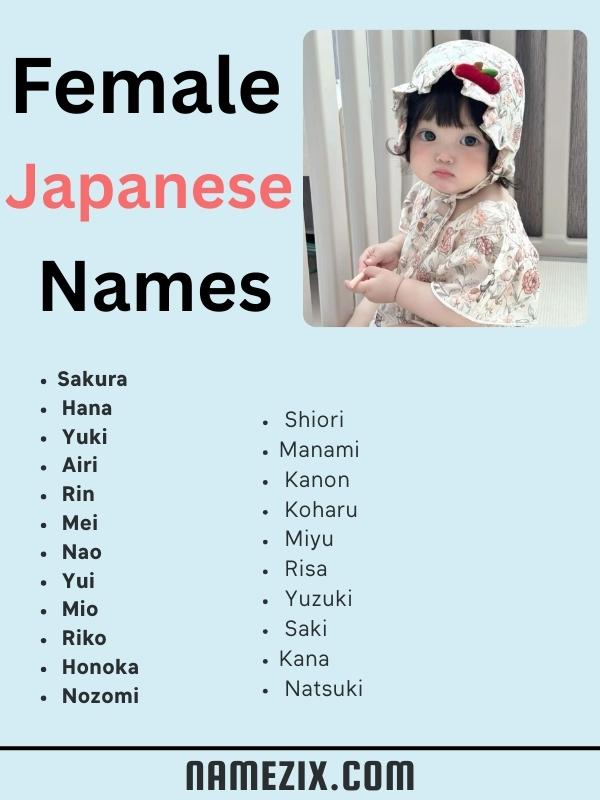
Japanese girl names often connect to flowers, beauty, seasons, and gentle qualities.
These names sound melodic and carry meanings that celebrate femininity and strength.
- Sakura (桜) – Pronounced “Sah-koo-rah” – Means “cherry blossom”
- Hana (花) – Pronounced “Hah-nah” – Means “flower”
- Yuki (雪) – Pronounced “Yoo-kee” – Means “snow”
- Airi (愛莉) – Pronounced “Ah-ee-ree” – Means “love jasmine”
- Rin (凛) – Pronounced “Reen” – Means “dignified”
- Mei (芽衣) – Pronounced “May” – Means “budding life”
- Nao (菜緒) – Pronounced “Nah-oh” – Means “greens beginning”
- Yui (結衣) – Pronounced “Yoo-ee” – Means “binding cloth”
- Mio (澪) – Pronounced “Mee-oh” – Means “beautiful waterway”
- Riko (莉子) – Pronounced “Ree-koh” – Means “jasmine child”
- Honoka (穂花) – Pronounced “Hoh-noh-kah” – Means “grain flower”
- Nozomi (望) – Pronounced “Noh-zoh-mee” – Means “hope”
- Shiori (栞) – Pronounced “Shee-oh-ree” – Means “bookmark”
- Manami (愛美) – Pronounced “Mah-nah-mee” – Means “affectionate beauty”
- Kanon (花音) – Pronounced “Kah-nohn” – Means “flower sound”
- Koharu (小春) – Pronounced “Koh-hah-roo” – Means “little spring”
- Miyu (美優) – Pronounced “Mee-yoo” – Means “beautiful gentleness”
- Risa (理沙) – Pronounced “Ree-sah” – Means “logical sand”
- Yuzuki (柚希) – Pronounced “Yoo-zoo-kee” – Means “citrus hope”
- Saki (咲) – Pronounced “Sah-kee” – Means “blossom”
- Kana (奏) – Pronounced “Kah-nah” – Means “play music”
- Natsuki (夏希) – Pronounced “Nah-tsoo-kee” – Means “summer hope”
- Haruka (遥) – Pronounced “Hah-roo-kah” – Means “distant”
- Momoko (桃子) – Pronounced “Moh-moh-koh” – Means “peach child”
- Sumire (菫) – Pronounced “Soo-mee-reh” – Means “violet flower”
- Kokoro (心) – Pronounced “Koh-koh-roh” – Means “heart”
- Tsukiko (月子) – Pronounced “Tsoo-kee-koh” – Means “moon child”
- Ran (蘭) – Pronounced “Rahn” – Means “orchid”
- Hoshi (星) – Pronounced “Hoh-shee” – Means “star”
- Natsuha (夏羽) – Pronounced “Nah-tsoo-hah” – Means “summer feather”
- Chiyo (千代) – Pronounced “Chee-yoh” – Means “thousand generations”
- Emi (笑美) – Pronounced “Eh-mee” – Means “blessed beauty”
- Kaori (香) – Pronounced “Kah-oh-ree” – Means “fragrance”
- Megumi (恵) – Pronounced “Meh-goo-mee” – Means “blessing”
- Nami (波) – Pronounced “Nah-mee” – Means “wave”
- Tsubaki (椿) – Pronounced “Tsoo-bah-kee” – Means “camellia flower”
- Usagi (兎) – Pronounced “Oo-sah-gee” – Means “rabbit”
- Wakaba (若葉) – Pronounced “Wah-kah-bah” – Means “young leaf”
- Azami (薊) – Pronounced “Ah-zah-mee” – Means “thistle”
- Botan (牡丹) – Pronounced “Boh-tahn” – Means “peony”
- Kiku (菊) – Pronounced “Kee-koo” – Means “chrysanthemum”
- Matsu (松) – Pronounced “Mah-tsoo” – Means “pine tree”
- Suzume (雀) – Pronounced “Soo-zoo-meh” – Means “sparrow”
- Tsuru (鶴) – Pronounced “Tsoo-roo” – Means “crane”
- Yuri (百合) – Pronounced “Yoo-ree” – Means “lily”
- Hinako (陽菜子) – Pronounced “Hee-nah-koh” – Means “sunny vegetable child”
- Kotone (琴音) – Pronounced “Koh-toh-neh” – Means “harp sound”
- Mizuki (美月) – Pronounced “Mee-zoo-kee” – Means “beautiful moon”
- Nanami (七海) – Pronounced “Nah-nah-mee” – Means “seven seas”
- Rena (麗奈) – Pronounced “Reh-nah” – Means “lovely greens”
Rare Japanese Last Names
Japanese surnames tell stories about geography, nature, and family heritage.
Pairing a unique last name with your chosen first name creates something truly special.
- Aoyama (青山) – Pronounced “Ah-oh-yah-mah” – Means “blue mountain”
- Mizuno (水野) – Pronounced “Mee-zoo-noh” – Means “water field”
- Kageyama (影山) – Pronounced “Kah-geh-yah-mah” – Means “shadow mountain”
- Tsukino (月野) – Pronounced “Tsoo-kee-noh” – Means “moon field”
- Hoshino (星野) – Pronounced “Hoh-shee-noh” – Means “star field”
- Kazemoto (風本) – Pronounced “Kah-zeh-moh-toh” – Means “wind origin”
- Yukimura (雪村) – Pronounced “Yoo-kee-moo-rah” – Means “snow village”
- Sakuragi (桜木) – Pronounced “Sah-koo-rah-gee” – Means “cherry blossom tree”
- Morikawa (森川) – Pronounced “Moh-ree-kah-wah” – Means “forest river”
- Takemoto (竹本) – Pronounced “Tah-keh-moh-toh” – Means “bamboo origin”
- Koizumi (小泉) – Pronounced “Koh-ee-zoo-mee” – Means “small spring”
- Hayakawa (早川) – Pronounced “Hah-yah-kah-wah” – Means “quick river”
- Nishimura (西村) – Pronounced “Nee-shee-moo-rah” – Means “west village”
- Higashiyama (東山) – Pronounced “Hee-gah-shee-yah-mah” – Means “east mountain”
- Minamikawa (南川) – Pronounced “Mee-nah-mee-kah-wah” – Means “south river”
- Kitano (北野) – Pronounced “Kee-tah-noh” – Means “north field”
Unique Unisex Japanese Names
Some Japanese names work beautifully for any child, regardless of gender. These names give you flexibility while still carrying meaningful stories.
- Akari (光) – Pronounced “Ah-kah-ree” – Means “light”
- Hikari (光) – Pronounced “Hee-kah-ree” – Means “radiance”
- Izumi (泉) – Pronounced “Ee-zoo-mee” – Means “spring water”
- Kaoru (薫) – Pronounced “Kah-oh-roo” – Means “fragrant”
- Makoto (誠) – Pronounced “Mah-koh-toh” – Means “sincerity”
- Natsuki (夏樹) – Pronounced “Nah-tsoo-kee” – Means “summer tree”
- Shion (紫苑) – Pronounced “Shee-ohn” – Means “aster flower”
- Takumi (匠) – Pronounced “Tah-koo-mee” – Means “artisan”
- Yuki (優希) – Pronounced “Yoo-kee” – Means “gentle hope”
- Nagisa (渚) – Pronounced “Nah-gee-sah” – Means “shore”
- Akane (茜) – Pronounced “Ah-kah-neh” – Means “deep red”
- Chizu (千鶴) – Pronounced “Chee-zoo” – Means “thousand cranes”
- Mamoru (守) – Pronounced “Mah-moh-roo” – Means “protect”
- Nori (法) – Pronounced “Noh-ree” – Means “law”
- Tsubasa (翼) – Pronounced “Tsoo-bah-sah” – Means “wing”
- Hayate (疾風) – Pronounced “Hah-yah-teh” – Means “swift wind”
- Chiaki (千秋) – Pronounced “Chee-ah-kee” – Means “thousand autumns”
- Midori (緑) – Pronounced “Mee-doh-ree” – Means “green”
- Nao (直) – Pronounced “Nah-oh” – Means “honest”
- Shizuka (静) – Pronounced “Shee-zoo-kah” – Means “quiet”
- Tomo (智) – Pronounced “Toh-moh” – Means “wisdom”
- Yasu (康) – Pronounced “Yah-soo” – Means “peaceful”
- Kiyoshi (清) – Pronounced “Kee-yoh-shee” – Means “pure”
- Masumi (真澄) – Pronounced “Mah-soo-mee” – Means “true clarity”
- Nozomi (望) – Pronounced “Noh-zoh-mee” – Means “hope”
- Rui (瑠衣) – Pronounced “Roo-ee” – Means “precious cloth”
- Shou (翔) – Pronounced “Shoh” – Means “soar”
- Tokio (時雄) – Pronounced “Toh-kee-oh” – Means “time hero”
- Yori (依) – Pronounced “Yoh-ree” – Means “trust”
- Atsushi (篤) – Pronounced “Ah-tsoo-shee” – Means “sincere”
- Haru (晴) – Pronounced “Hah-roo” – Means “clear weather”
- Minori (実) – Pronounced “Mee-noh-ree” – Means “truth”
- Rei (礼) – Pronounced “Ray” – Means “courtesy”
- Sato (里) – Pronounced “Sah-toh” – Means “village”
- Tsukasa (司) – Pronounced “Tsoo-kah-sah” – Means “director”
- Yoshi (良) – Pronounced “Yoh-shee” – Means “good”
- Kyo (京) – Pronounced “Kyoh” – Means “capital”
- Michi (道) – Pronounced “Mee-chee” – Means “path”
- Naoki (直樹) – Pronounced “Nah-oh-kee” – Means “honest tree”
- Suzu (鈴) – Pronounced “Soo-zoo” – Means “bell”
Cool Japanese Names
Want something that sounds modern and fresh? These cool Japanese names blend traditional meanings with contemporary appeal.
- Ryuu (龍) – Pronounced “Ryoo” – Means “dragon”
- Renji (蓮司) – Pronounced “Rehn-jee” – Means “lotus director”
- Kurou (玖朗) – Pronounced “Koo-roh” – Means “ninth bright”
- Raiden (雷電) – Pronounced “Rah-ee-dehn” – Means “thunder lightning”
- Tora (虎) – Pronounced “Toh-rah” – Means “tiger”
- Riku (陸) – Pronounced “Ree-koo” – Means “land”
- Itsuki (樹) – Pronounced “Eet-soo-kee” – Means “tree”
- Tatsuya (達也) – Pronounced “Tah-tsoo-yah” – Means “accomplished”
- Kenji (健司) – Pronounced “Kehn-jee” – Means “healthy director”
- Shinji (真司) – Pronounced “Sheen-jee” – Means “true director”
- Kaito (海斗) – Pronounced “Kah-ee-toh” – Means “ocean warrior”
- Rento (蓮斗) – Pronounced “Rehn-toh” – Means “lotus warrior”
- Zenko (善光) – Pronounced “Zehn-koh” – Means “good light”
- Raito (来斗) – Pronounced “Rah-ee-toh” – Means “coming warrior”
- Soushi (颯士) – Pronounced “Soh-shee” – Means “refreshing warrior”
- Kairi (海里) – Pronounced “Kah-ee-ree” – Means “ocean village”
- Ryouta (涼太) – Pronounced “Ryoh-tah” – Means “refreshing thick”
- Kouga (光牙) – Pronounced “Koh-gah” – Means “light fang”
- Reito (玲斗) – Pronounced “Ray-toh” – Means “crystal warrior”
- Shougo (翔悟) – Pronounced “Shoh-goh” – Means “soaring enlightenment”
- Yuzuru (譲) – Pronounced “Yoo-zoo-roo” – Means “yielding”
- Raiga (雷牙) – Pronounced “Rah-ee-gah” – Means “thunder fang”
- Seiichi (誠一) – Pronounced “Say-ee-chee” – Means “sincere one”
- Tougo (冬悟) – Pronounced “Toh-goh” – Means “winter enlightenment”
- Kazuto (一斗) – Pronounced “Kah-zoo-toh” – Means “one warrior”
- Raidou (雷道) – Pronounced “Rah-ee-doh” – Means “thunder path”
- Souya (颯也) – Pronounced “Soh-yah” – Means “refreshing also”
- Rentaro (蓮太郎) – Pronounced “Rehn-tah-roh” – Means “lotus thick son”
- Koushi (光志) – Pronounced “Koh-shee” – Means “light ambition”
- Reiga (玲牙) – Pronounced “Ray-gah” – Means “crystal fang”
- Shouto (翔斗) – Pronounced “Shoh-toh” – Means “soaring warrior”
- Keitaro (慶太郎) – Pronounced “Kay-tah-roh” – Means “happy thick son”
- Raiki (雷輝) – Pronounced “Rah-ee-kee” – Means “thunder radiance”
- Souji (颯二) – Pronounced “Soh-jee” – Means “refreshing second”
- Ryuuto (龍斗) – Pronounced “Ryoo-toh” – Means “dragon warrior”
- Kenzo (健蔵) – Pronounced “Kehn-zoh” – Means “healthy storehouse”
- Reiya (玲也) – Pronounced “Ray-yah” – Means “crystal also”
- Shouki (翔輝) – Pronounced “Shoh-kee” – Means “soaring radiance”
- Taiki (大輝) – Pronounced “Tah-ee-kee” – Means “great radiance”
- Raikou (雷光) – Pronounced “Rah-ee-koh” – Means “thunder light”
Things You Must Know About Rare or Unique Japanese Names
Understanding kanji makes all the difference. The same sound can mean completely different things depending on which characters you use. Haruka written as 遥 means “distant,” but 春香 means “spring fragrance.” Always verify the kanji matches the meaning you want. Ask a Japanese speaker to double-check before you commit.
Pronunciation challenges are real. Practice saying the name out loud with your family. Can grandparents say it without stumbling? Will teachers at school get it right? Think about nicknames too, because long names naturally get shortened. Make sure you love both the full name and any nickname that might develop.
Cultural respect matters deeply. Japanese names carry heritage and meaning that deserve honor. Research the cultural context behind your chosen name. Avoid names with religious significance you don’t understand. Check your country’s naming laws, since some places restrict certain characters. Connect with Japanese community members who can guide you and catch issues you might miss.
Frequently Asked Questions
Can non-Japanese parents use Japanese names for their children?
Yes, but research meanings and show respect for the cultural heritage behind them.
How do I know if I’m pronouncing a Japanese name correctly?
Listen to native speakers online or ask Japanese friends for pronunciation help and guidance.
Do Japanese names work well with Western last names?
Yes, many blend beautifully, just say the full name aloud to check the flow.
What’s the difference between kanji, hiragana, and katakana for names?
Kanji shows meaning, hiragana is simpler script, katakana typically represents foreign names or words.
Should I register my child’s name in kanji or romaji officially?
Check your country’s laws, most Western countries require Roman letters for official birth certificates.
Conclusion
Choosing a Japanese name is more than selecting something that sounds beautiful—it’s embracing a piece of culture, history, and nature woven into a single expression. Each name carries symbolism and a story waiting to be shared. Whether you were inspired by graceful meanings, soft pronunciations, or the growing influence of anime and modern trends, this journey has surely brought you closer to the right choice.
Now that you’ve explored our collection of Japanese names, you’re one step closer to choosing one that feels meaningful, memorable, and truly special. We hope you find the perfect name.